
Company Blog
2026年3月9日
Detailed Explanation of Nano Infrared Energy-saving Band Heater
A Detailed Analysis of Nano-Infrared Energy-Saving Heating Bands: Technology, Principles, and Industrial Advantages
In the modern plastic processing industry, energy consumption remains one of the largest overhead costs for manufacturers. Traditional heating methods, while functional, often suffer from low thermal efficiency and significant heat loss. As global industries push toward "Efficiency Redefined," the emergence of the Nano-Infrared Energy-Saving Band Heater represents a transformative leap in high-precision automation solutions. This article provides a comprehensive technical breakdown of this technology, exploring its structural integrity, energy-saving principles, and why it has become a dependable asset for factories worldwide.
1. The Limitations of Traditional Heating Methods
To appreciate the innovation of nano-infrared technology, one must first understand the bottlenecks associated with conventional heating bands, such as mica or ceramic heaters.
- Low Electrothermal Conversion: Standard heating bands typically have an electrothermal conversion efficiency of only about 60%. A large portion of the electrical energy is wasted before it ever reaches the material.
- Inefficient Contact Heat Transfer: Traditional heaters rely on physical contact to transfer heat to the machine barrel. However, the vibrations of an injection molding machine often create tiny gaps between the heater and the barrel, leading to poor heat conduction.
- Significant Ambient Heat Loss: Conventional heaters often lack high-performance insulation. As they heat the barrel, they simultaneously heat the surrounding factory air, resulting in low heat utilization and a hotter, less comfortable working environment.
2. Structural Integrity and Advanced Composition
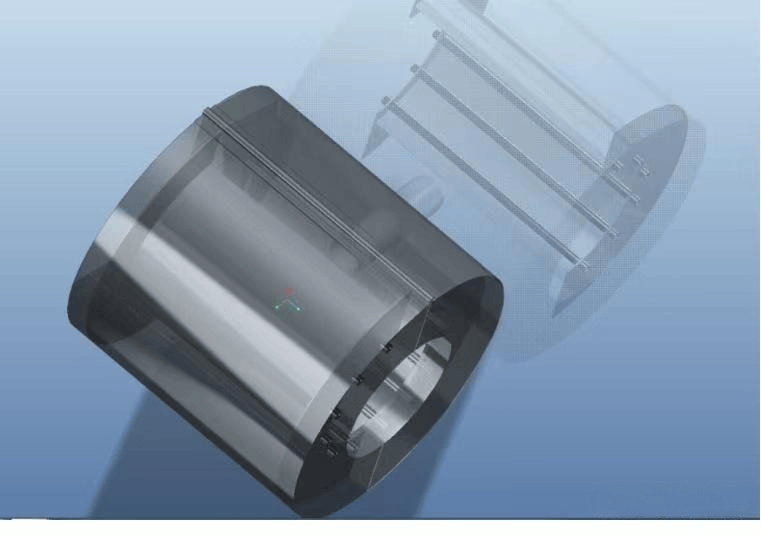
The Nano-Infrared Energy-Saving Heating Band is engineered with a multi-layered "Smart Design" to solve these legacy issues. Its structural components work in harmony to maximize thermal output while minimizing waste:
- Far-Infrared Emitter: The innermost layer uses high-purity quartz tubes or specialized far-infrared emitters that convert electricity into radiant heat.
- Thermal Reflection Layer: This layer reflects the radiant heat back toward the machine barrel, ensuring that energy is focused exactly where it is needed.
- Nano-Scale Vacuum Insulation: A critical feature is the nano-scale insulation layer with an ultra-low thermal conductivity coefficient. This acts as a powerful barrier, preventing heat from escaping into the atmosphere.
- Stainless Steel Outer Shell: The exterior is encased in high-grade stainless steel for durability and corrosion resistance, maintaining the "Material Integrity" required for harsh industrial environments.
- High-Temperature Radiating Layer: The final protective layer ensures surface temperatures remain safe for operators.
3. The Science of Infrared Energy Transfer
The core of this technology lies in Infrared Radiation (IR). Infrared rays are non-visible electromagnetic waves with wavelengths longer than visible red light, typically ranging from 780nm to 1mm.
- Mechanism of Energy Transfer: Infrared heaters transfer energy from a higher-temperature emitter to a lower-temperature body through far-infrared radiation. Unlike conduction, this process does not require direct contact or a medium, allowing it to operate efficiently in vacuum or atmospheric conditions.
- Minimal Thermal Inertia: One of the most significant advantages is the extremely low thermal inertia. Upon powering on, the heater can reach 50% of its rated power within 1–2 seconds and achieve full-power operation in just 2–4 seconds. This rapid response allows for incredibly precise temperature control, which is essential for high-end injection molding applications.
4. Key Performance Advantages
By switching to nano-infrared heating bands, manufacturers can achieve energy savings ranging from 30% to 90% compared to traditional methods. This is achieved through three primary performance upgrades:
- Increased Electrothermal Conversion Rate: The use of quartz far-infrared radiation significantly increases the efficiency of converting electricity into heat.
- Enhanced Heat Transfer Efficiency: By utilizing specific wavelengths of infrared radiation, the energy penetrates the barrel more effectively than traditional surface conduction.
- Drastic Reduction in Heat Loss: The combination of the thermal reflection layer and the ultra-low conductivity insulation layer ensures that heat is retained within the system. This not only saves power but also lowers the surface temperature of the heater, improving workshop safety and reducing the load on air conditioning systems.
Conclusion
The Nano-Infrared Energy-Saving Band Heater is not just an upgrade; it is a critical tool for any plastic processor looking to survive and thrive in an increasingly competitive landscape. By combining advanced far-infrared radiation with nano-scale insulation, this technology eliminates the bottlenecks of traditional heating, offering a machine that is truly "worthy of trust".
With its ability to reach target temperatures in seconds, maintain them with extreme precision, and reduce electricity bills by up to 90%, it stands as the premier choice for modern, eco-friendly manufacturing. Yushine remains committed to helping our global partners optimize their production through these high-efficiency, "User-Centric" engineering solutions.