
Company Blog
2026年3月6日
How To Use The Mold Temperature Machine Correctly?
The Practical Guide: How to Use Your Mold Temperature Machine Correctly
In the world of high-precision manufacturing, the Mold Temperature Controller (MTC)—often called a mold temperature machine—is the silent partner that ensures every part comes out perfectly. Whether you are a small workshop or a large-scale factory, understanding how to operate this equipment is the key to maintaining a "smoothest experience" on your production line.
1. Preparation: Setting the Foundation for Success
Before you even press the "Power" button, the work begins. A mold temperature machine is a circulating system, and like any system, it needs to be connected properly to function.
- Check Your Hoses: Ensure that the high-pressure hoses connecting the machine to the mold are in good condition. Look for cracks or signs of wear, as a leak in a pressurized system can be dangerous.
- Tight Connections: Use a wrench to ensure all fittings are tight. Loose connections lead to air leaks or medium loss, which can create a "bottleneck" in your production speed.
- The Right Medium: If you are using a water-type machine, ensure your water source is filtered to prevent scale. If it is an oil-type machine, make sure you are using high-quality thermal oil that matches the machine’s temperature rating.
- Electrical Safety: As part of our commitment to "Structural Integrity," always verify that the power supply matches the machine's requirements and that the yellow ground wire is securely connected.
2. The Start-Up Phase: Patience is a Virtue
Many operators make the mistake of turning on the heat the moment the machine is plugged in. To ensure a "smoothest experience," you must follow a staged start-up procedure.
- Circulation First: Turn on the pump and let the water or oil circulate through the mold for at least two to three minutes without heating. This "air purging" phase pushes out any trapped air bubbles in the pipes.
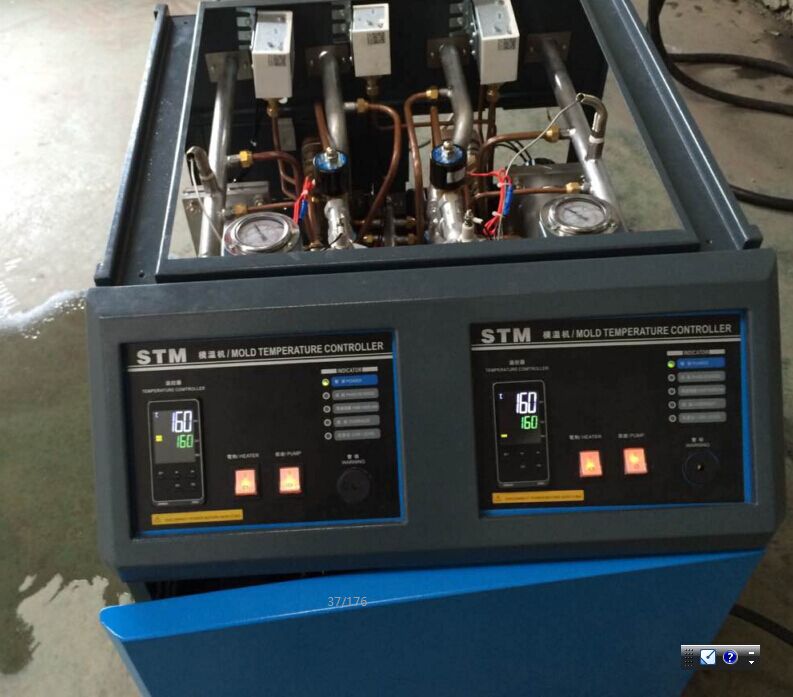
- Observe the Gauges: While the pump is running, watch the pressure gauges. The needle should be steady. If it bounces, there is still air in the system or a blockage in the mold.
- Set Your Temperature: Use the intuitive PLC touchscreen to enter your target temperature. Our "Smart Design" ensures that the interface is easy to understand, even for new operators.
- Step-by-Step Heating: For very large or sensitive molds, do not jump from 20°C to 120°C instantly. Increase the temperature in 20-degree increments to allow the metal of the mold to expand naturally without cracking.
3. Operational Best Practices: Maintaining the "Sweet Spot"
Once the machine is at the target temperature, the goal is stability. This is where the "Operational Practicality" of Yushine machines truly shines.
- Monitor the PLC Data: Periodically check the screen for the actual temperature versus the set temperature. A high-quality machine should keep the fluctuation within ±1°C.
- Listen to the Machine: Industrial machines "talk" to you. A sudden change in pump noise or a loud rattling in the pipes usually means a filter is getting clogged or the oil is starting to degrade.
- Maintain Clean Water/Oil: For water systems, keep the cooling water flowing into the heat exchanger clean. For oil systems, check the color of the oil. If it turns dark and thick, it is carbonizing and needs to be replaced to protect the "Material Integrity" of the internal heaters.
4. The Shutdown Protocol: Don't Just Pull the Plug
How you turn off the machine is just as important as how you turn it on. This is the stage where most preventable damage occurs.
- The Cooling Phase: Never shut off an MTC while it is still at high heat. If you turn off the pump at 150°C, the oil or water sitting inside the heating tank will "cook." In oil machines, this causes carbon buildup; in water machines, it causes rapid scaling.
- Cool Down First: Always lower the set temperature to below 50°C and let the pump run until the actual temperature drops to that level. This protects the heating elements and the pump seals.
- Release the Pressure: Once the machine is cool, turn off the pump and then the main power. If the machine will be idle for a long time, drain the water to prevent rust from forming inside the mold channels.
5. Safety and Professional Maintenance
A mold temperature machine is a powerful tool, but it must be respected.
- No Wet Hands: Never touch the control panel or electrical box with wet hands.
- Keep it Closed: Do not run the machine with the control cabinet doors open. This invites dust and oil mist to settle on the sensitive PLC electronics.
- Call the Professionals: If a malfunction occurs, do not treat it like a "simple machine" and try to take it apart yourself. Special technical personnel are required for repairs to protect the machine's longevity and your after-sales service.
Conclusion: A Trusted Tool for Your Growth
Using a mold temperature machine correctly is a sign of a professional factory. By following these simple, "worth of trust" steps—proper preparation, air purging, staged heating, and a cooled shutdown—you ensure that your Yushine equipment remains the most efficient and practical solution in your facility.