
Company Blog
2026年3月7日
Precautions for Using Industrial Ovens
Professional Operational Guidelines for Industrial Ovens: Ensuring Safety and Performance
In the modern manufacturing landscape, industrial ovens are critical assets for processes ranging from curing and drying to high-temperature testing.
1. Site Selection and Pre-Installation Setup
The foundation of safe operation begins with how the oven is placed within your facility.
- Strategic Positioning: Industrial ovens must be placed in a stable, well-ventilated area. It is strictly forbidden to place flammable or explosive materials in the vicinity of the equipment to prevent fire hazards.
- Environmental Protection: To maintain "Operational Practicality," the oven should be placed in a dry room. Both the interior and exterior of the machine must be kept clean to ensure consistent performance.
2. Electrical Safety and Grounding Requirements
Electrical integrity is paramount for high-precision industrial equipment. Failure to follow electrical protocols can result in equipment damage or personal injury.
- Voltage Verification: Before every use of a high-temperature oven, operators must verify that the power supply voltage is consistent with the equipment's specifications.
- Mandatory Grounding: According to industrial safety regulations, the oven must be properly grounded using a dedicated power socket and ground wire.
- Wiring Protection: Power lines must never be placed in high-temperature or humid areas to prevent rubber aging and electrical leakage. Furthermore, do not place heavy objects on the cables or pinch them during operation.
3. Start-Up and Temperature Control Procedures
Achieving thermal stability requires a "User-Centric" approach to operation.
- Initial Sequence: Once all preparations are complete, the test product can be placed inside. Connect the power and turn on the system; a red indicator light signifies that the heating process has begun.
- Status Indicators: When the oven reaches the pre-set control temperature, the red light will turn off and the green light will illuminate.
- Airflow Integrity: For ovens equipped with a blast fan (forced air), the fan must remain operational during the constant temperature heating process. This ensures uniformity of the internal room temperature and protects the heating elements from overheating damage.
4. Material Handling and Loading Precautions
How items are placed within the oven significantly affects heat distribution and safety.
- Avoid Heat Obstruction: Never place test samples directly on the heat dissipation plate (bottom of the chamber), as this obstructs the upward flow of hot air and can lead to localized overheating.
- Prohibited Materials: It is strictly forbidden to bake flammable, explosive, volatile, or corrosive items.
- Weight Constraints: Overweight or ultra-heavy items should not be placed inside the oven box, as they may damage the structural integrity of the shelving or the chamber floor.
5. Safety During Operation and Maintenance
Maintaining a safe industrial ecosystem involves strict behavioral protocols during the heating cycle.
- Contact Restrictions: While the unit is powered, it is prohibited to touch electrical components with wet hands or clean the unit with wet cloths. Always disconnect the power before any cleaning or maintenance work.
- Door Management: When observing samples, utilize the glass viewing window. Opening the door frequently should be avoided as it disrupts the constant temperature and can cause sudden cooling, which may damage the glass door or affect the material process.
- Temperature Limits: The operating temperature must never exceed the maximum rated high-application temperature of the specific oven model.
- Personal Protection: When removing items from a high-temperature oven, operators must wear protective equipment (such as heat-resistant gloves) to prevent burns.
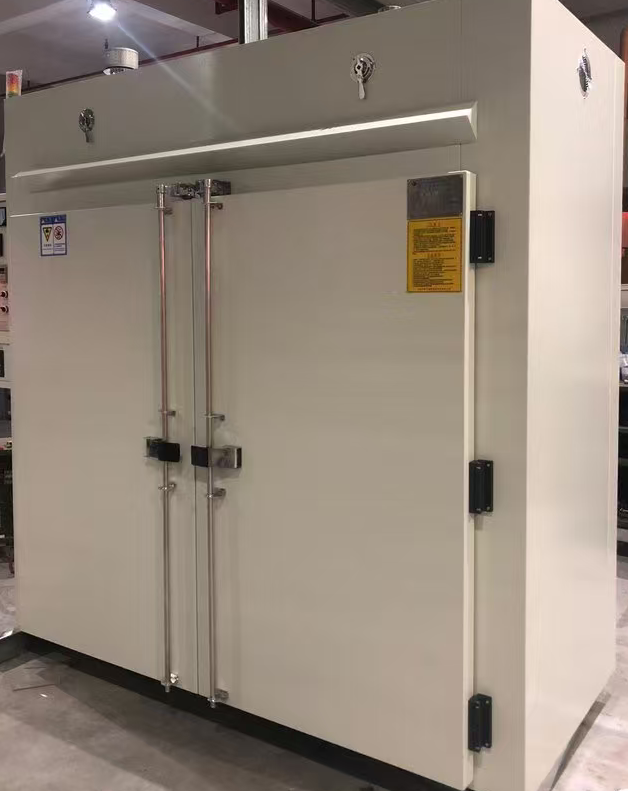
Conclusion: The Yushine Standard for Industrial Excellence
At Yushine, we believe that providing high-quality plastic processing auxiliary machinery is only the first step. We are committed to a "Customer-First" service model where we help our clients optimize their yields while ensuring safety is never compromised.
By following these professional operational guidelines—ensuring proper grounding, maintaining airflow integrity, and respecting material limits—you transform your industrial oven into a dependable asset that drives long-term profitability. Remember, a machine is only as effective as the safety culture of the team standing behind it.