
Company Blog
2026年3月13日
Why PTFE is Crowned the "King of Plastics
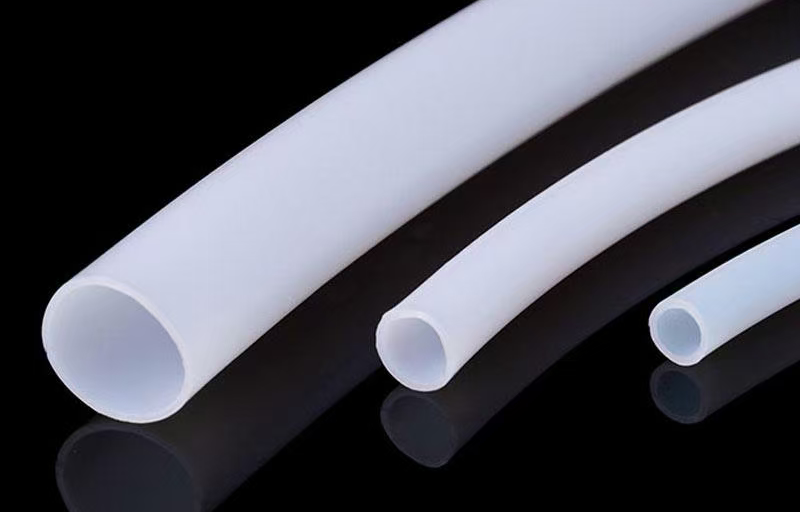
Teflon has three core hard core properties, each of which directly meets the same requirements for industrial production.
In the vast landscape of synthetic polymers, few materials possess the sheer versatility and extreme performance capabilities of Polytetrafluoroethylene (PTFE), commonly known as Teflon. Across global industrial sectors—from chemical processing and food manufacturing to high-end aerospace and electronics—PTFE is consistently hailed as the "King of Plastics". This title is not merely a marketing slogan; it is a reflection of the material's unique molecular structure which allows it to solve "Industrial Production Pain Points" that defeat almost every other plastic.
This article provides an in-depth exploration of why PTFE holds this prestigious status, focusing on its core performance metrics, its diverse application fields, and its irreplaceable value in modern manufacturing.
1. Extreme Thermal Resilience: From Deep Freeze to High Heat
The most immediately striking characteristic of PTFE is its "Ultimate Temperature Performance". While standard plastics often become brittle in the cold or melt under heat, PTFE remains functionally stable across an ultra-wide temperature range from -65°C to +260°C.
- Cryogenic Stability: For deep-cold applications involving liquid nitrogen or cryogenic fluid transport, PTFE tubes do not crack or become brittle.
- High-Temperature Endurance: In environments involving high-pressure steam, hot oil transfer, or industrial heating, the material resists softening, deformation, and decomposition. It can even withstand short-term exposure to temperatures as high as 300°C without losing its critical material properties.
- Adaptability: This temperature resilience makes it the "go-to" choice for any extreme environment where material failure is not an option.
2. Unmatched Chemical Inertia: Resisting the Impossible
Perhaps the most significant reason PTFE is the "King" is its "Crushing Chemical Resistance". The carbon-fluorine bond in PTFE is one of the strongest in organic chemistry, making the material nearly impervious to almost all known chemical media.
- Universal Resistance: PTFE can resist the corrosive effects of "Aqua Regia" (a mixture of nitric and hydrochloric acids), strong acids, strong alkalis, and various organic solvents.
- Longevity in Corrosive Environments: In scenarios like chemical pickling, electroplating production lines, and hazardous waste treatment, PTFE components can be used for long periods without corroding or leaking.
- Extended Service Life: By drastically reducing the frequency of pipe or seal replacements, PTFE offers a significant long-term economic advantage in harsh chemical processing.
3. Superior Insulation and Non-Stick Characteristics
Beyond temperature and chemicals, PTFE possesses "Exquisite Insulation and Non-Stick Properties" that are critical for specialized high-tech industries.
- Electrical Insulation: As an excellent dielectric material, it is non-conductive and free from static electricity issues. This makes it a primary choice for insulating protective sleeves in the electronics and aerospace sectors.
- Ultra-Low Friction: The surface of PTFE has an extremely low "Friction Coefficient," making it smooth and non-stick.
- Fluid Transport Efficiency: When transporting viscous fluids or food raw materials, the non-stick surface ensures that materials do not leave residues, making the system easy to clean and preventing blockages.
4. Diverse Application Fields: "Where It Is Needed, It Is There"
The "King of Plastics" is not confined to a single niche; its irreplaceable properties have allowed it to penetrate every core area of modern industry.
- Chemical Industry: Handling and transporting highly corrosive fluids with absolute safety.
- Food and Medical: Providing hygienic, sanitary-grade pipelines that are easy to sterilize and resistant to bacterial buildup.
- Electronics: Serving as high-performance protective jackets for wiring and sensitive components.
- Mechanical Engineering: Used in wear-resistant transmission parts due to its low friction and high durability.
- High-End Manufacturing & Aerospace: Essential for extreme environments where other materials would fail instantaneously.
Conclusion: The Practical Value of a Legend
The designation of PTFE as the "King of Plastics" is based on its ability to provide a "Bespoke Experience" of reliability in the most punishing conditions. Its combination of extreme thermal stability, universal chemical resistance, and superior electrical properties creates a material that is truly "worthy of trust".
For manufacturers focusing on "Efficiency Redefined," the use of PTFE is a strategic choice. While the initial material cost may be higher than standard plastics, the reduction in downtime, maintenance, and premature failure provides an undeniable return on investment. As industrial demands continue to push the boundaries of science, PTFE remains the undefeated sovereign of the polymer world, proving its practical value every day on the factory floor and beyond.